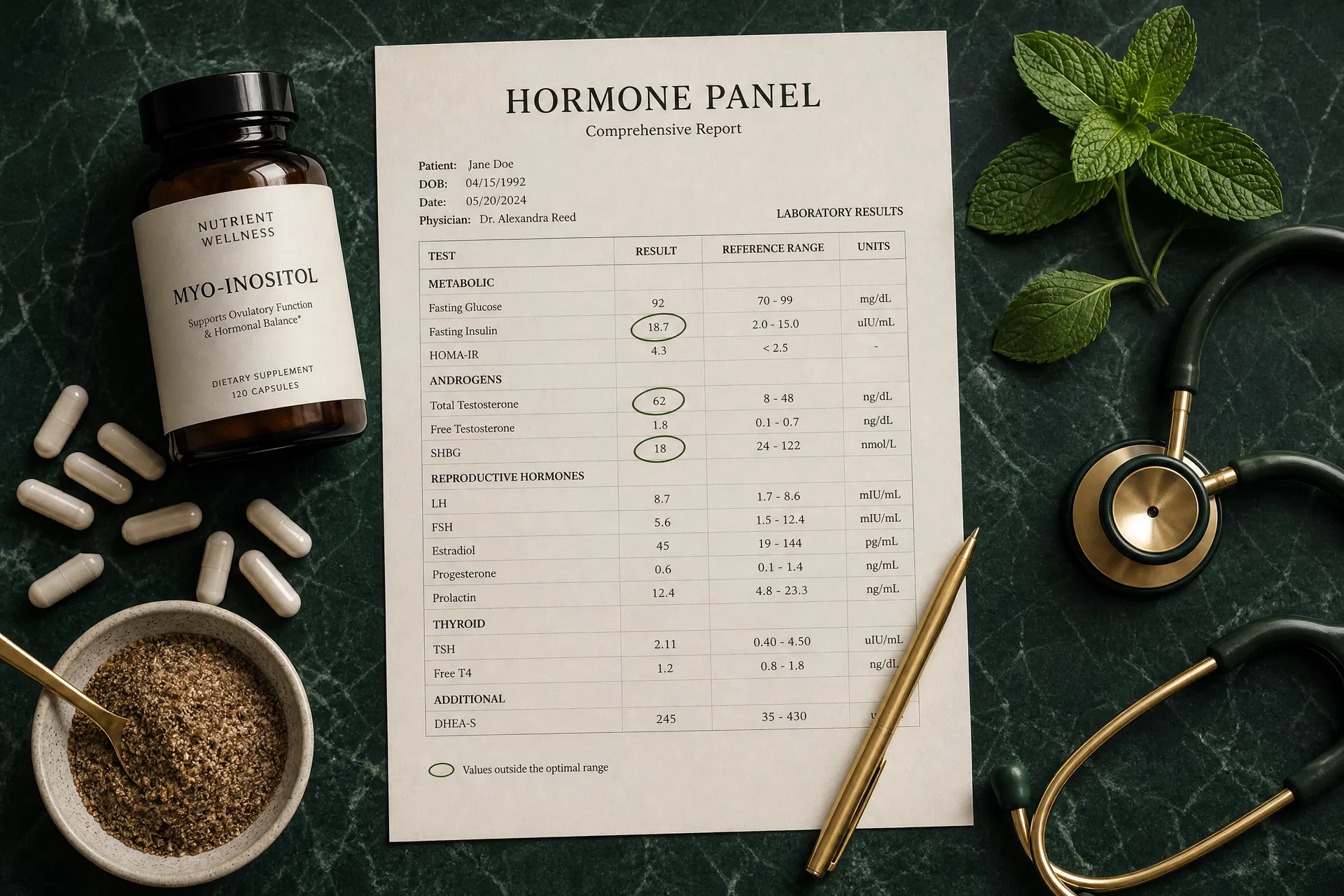
PCOS Is Not an Ovary Problem. It Never Was. Here Are the Three Root Causes Your Doctor Is Missing.
By Dr. Jaday Garcia, PhD, BCDNM, 2026 Global Recognition Award Winner
Last Updated: July 23, 2026
Keywords: PCOS root causes women, PCOS insulin resistance mechanism, PCOS nervous system dysfunction, PCOS gut dysbiosis, PMOS polycystic ovary syndrome renamed, PCOS functional medicine, PCOS hyperinsulinemia androgen excess, PCOS sympathetic nervous system, PCOS gut microbiome inflammation, PCOS treatment root cause
You have been told you have PCOS. Maybe you were told at 16. Maybe at 32. Maybe you found out after years of irregular periods, cystic acne, thinning hair, and a body that seemed to gain weight no matter what you did.
And what did they offer you? Birth control. Metformin. Spironolactone. Maybe a referral to a dietitian who told you to eat less and move more.
Nobody explained what was actually driving the condition. Nobody told you that the cysts on your ovaries are a symptom, not a cause. Nobody connected the dots between your fasting insulin, your nervous system, and the bacteria living in your gut.
That changes today.
PCOS was officially renamed PMOS (Polyendocrine Metabolic Ovarian Syndrome) by the Endocrine Society in May 2026 [1]. The name change happened because the medical community finally acknowledged what functional medicine practitioners have been saying for over a decade: this condition is not about your ovaries. It is a metabolic, endocrine, and nervous system disorder that happens to show up in the ovaries.
One in eight women has this condition [1]. Most of them are being managed with symptom-suppressing medications while the upstream drivers continue to worsen. Many also experience chronic fatigue that their doctors cannot explain. In my clinical practice at Mind Body Restored, I see women every week who have been on birth control for 10 or 15 years for their PCOS, and when they come off, the symptoms are worse than before. The condition progressed because nobody addressed the root.
This article will walk you through the three mechanisms that actually drive PCOS/PMOS. These are not theories. They are published, peer-reviewed, and measurable with functional lab testing. Once you understand them, you will see why the standard approach fails and what actually needs to happen for your body to heal.
Mechanism 1: Hyperinsulinemia Is Hijacking Your Ovaries
Here is what most women with PCOS are never told: your ovaries are responding to a signal. That signal is insulin.
When insulin levels stay chronically elevated, a condition called hyperinsulinemia, it directly stimulates the theca cells in your ovaries to produce more androgens. Insulin works synergistically with luteinizing hormone (LH) to increase androgen production and upregulate LH receptors on those same theca cells [2]. This means the more insulin you have circulating, the more sensitive your ovaries become to the hormonal signals that drive testosterone production.
At the same time, elevated insulin suppresses sex hormone binding globulin (SHBG) production in the liver [2]. SHBG is the protein that binds to testosterone and keeps it inactive. When SHBG drops, free testosterone rises. This is why you get the acne, the hair loss, the facial hair growth, and the irregular cycles. It is not that your ovaries are broken. It is that they are responding appropriately to an abnormal metabolic environment.
A 2025 review in the Journal of Endocrinology reappraised the relationship between hyperinsulinemia and insulin resistance in PCOS and found that hyperinsulinemia may actually precede and drive insulin resistance, rather than the other way around [2]. This is a significant shift in understanding. It means that for many women, the elevated insulin comes first. The metabolic dysfunction follows.
Here is what this looks like in clinical practice. A woman comes in with a fasting glucose of 88 mg/dL. Her doctor says her blood sugar is fine. But when we run a fasting insulin, it comes back at 14 uIU/mL. Her HOMA-IR is 3.0. That is insulin resistance. Her glucose looks normal because her pancreas is working overtime to keep it there. By the time glucose rises, the metabolic damage has been accumulating for years.
A 2025 study published in Frontiers in Endocrinology confirmed that chronic hyperinsulinemia not only stimulates ovarian theca cells directly but also upregulates follistatin, which further disrupts follicular development and contributes to anovulation [3]. This is the mechanism behind the "cysts" on ultrasound. They are not true cysts. They are follicles that started developing but could never mature enough to ovulate because the hormonal environment was too disrupted by insulin.
I had a client last year, a 29-year-old woman who had been diagnosed with PCOS at 19. She had been on birth control for a decade. When she came off to try to conceive, her periods disappeared entirely. Her OB-GYN ran a basic metabolic panel and told her everything was normal. When we ran a full insulin panel, her fasting insulin was 18 uIU/mL and her HOMA-IR was 3.9. She had significant insulin resistance that had been developing silently for years while the birth control masked the symptoms.
This is not an unusual case. It is the norm. The standard approach gives you Metformin and tells you to lose weight. But Metformin addresses insulin sensitivity at the cellular level without addressing why insulin is elevated in the first place. For many women, the drivers include chronic stress (which raises cortisol, which raises glucose, which raises insulin), gut dysbiosis (which impairs glucose metabolism), poor sleep (which reduces insulin sensitivity by up to 25% after just one night), and a diet pattern that spikes insulin repeatedly throughout the day.
What most women do not realize is that insulin resistance is not just about what you eat. It is about the total metabolic load on your body. A woman who sleeps 5 hours a night, drinks coffee on an empty stomach, eats her first meal at noon (and it is a high-carb meal), sits at a desk for 8 hours, and then exercises intensely in the evening is creating an insulin-resistant environment regardless of her calorie intake. The blood sugar and hormone connection runs deeper than most women realize. Every glucose spike triggers an insulin surge, and every insulin surge sends a signal to your ovaries to produce more testosterone.
Mind Body Restored does not guess. We run fasting insulin, HOMA-IR, hemoglobin A1c, and a comprehensive metabolic panel. We look at the pattern, not just the number. A fasting insulin above 7 uIU/mL tells us the metabolic cascade has already started, even when everything else looks "normal." If you have been told your labs are normal but you feel terrible, this is often why.
Mechanism 2: Your Nervous System Is Driving Ovarian Dysfunction
This is the mechanism that almost nobody talks about in conventional PCOS management. Your ovaries are innervated by the autonomic nervous system. They receive direct input from both sympathetic and parasympathetic nerve fibers through the ovarian plexus nerves and the superior ovarian nerves [4]. This means your nervous system is in constant communication with your reproductive organs.
In women with PCOS, research consistently shows autonomic nervous system dysfunction characterized by increased sympathetic nervous system activity and decreased vagal (parasympathetic) nerve activity [4]. Your body is stuck in a state of sympathetic overdrive. Fight or flight is running the show, and your ovaries are paying the price.
A 2025 study in the Journal of Ovarian Research introduced a new framework for understanding PCOS: the hypothalamic-sympathetic-fat (HSF) axis [5]. This research demonstrated that in PCOS, there is a distinct pattern of sympathetic dysregulation. Sympathetic activation in white adipose tissue promotes inflammatory responses and metabolic dysfunction, while reduced sympathetic signaling to brown adipose tissue decreases thermogenic capacity [5]. The result is a self-reinforcing cycle where nervous system overdrive promotes fat accumulation, inflammation, and hormonal disruption simultaneously.
Here is what this means in plain language. When your sympathetic nervous system is chronically activated, several things happen at once. Norepinephrine, the primary sympathetic neurotransmitter, directly influences ovarian steroid secretion and follicular development [4]. Elevated sympathetic tone increases ovarian androgen production independent of insulin. It disrupts the timing of follicular maturation. It impairs ovulation. And it does all of this while also raising cortisol, which further suppresses progesterone and disrupts the entire hormonal cascade.
This is why so many women with PCOS also have anxiety, sleep disruption, digestive issues, and an inability to lose weight despite doing everything "right." These are not separate problems. They are all downstream effects of a nervous system that cannot downregulate.
I wrote extensively about this pattern in my article on nervous system dysregulation and chronic symptoms. The nervous system is the master regulator. When it is stuck in sympathetic dominance, every other system in the body reflects that state. Your thyroid slows down. Your cortisol rhythm distorts. Your ovaries receive signals that tell them to produce androgens instead of completing ovulation.
A 2025 review in Autonomic Neuroscience confirmed that sympathetic nervous system overactivity in PCOS is linked to excess cardiovascular risk, metabolic syndrome, and reproductive dysfunction [6]. This is not a minor finding. It means that the nervous system component of PCOS carries long-term health consequences that go far beyond irregular periods.
A 2023 study confirmed that women with PCOS have significantly elevated serum cortisol levels compared to healthy controls, with higher BMI and increased hirsutism correlating with greater cortisol dysregulation [10]. This tells us that the stress response system is not just mildly affected in PCOS. It is significantly disrupted, and the more severe the PCOS presentation, the more dysregulated the cortisol pattern tends to be.
In clinical practice, I assess nervous system function through heart rate variability (HRV) patterns, salivary cortisol rhythm testing, and a detailed history of stress exposure, trauma, and autonomic symptoms. Many women with PCOS have a history of adverse childhood experiences, chronic stress, or trauma that has kept their nervous system in a protective state for years or decades. The HPA axis dysfunction that results from this chronic activation is measurable, treatable, and often the missing piece in PCOS management.
I want to be clear about something. When I say "nervous system dysregulation," I am not saying PCOS is caused by stress alone. I am saying that chronic sympathetic activation is a measurable, physiological driver that directly affects ovarian function through nerve pathways. It is not psychological. It is neurological. The nerves that innervate your ovaries are firing at a rate that promotes androgen production and prevents ovulation. This is happening 24 hours a day, whether you feel stressed or not. Many women with PCOS tell me they do not feel particularly stressed. But their HRV data tells a different story. Their bodies are in a constant state of low-level alarm that has become so familiar they no longer recognize it as abnormal.
When we address nervous system regulation through targeted protocols, something remarkable happens. Cycles start to regulate. Androgens begin to normalize. Sleep improves. Anxiety decreases. The body begins to shift out of the protective state that was driving the entire pattern.
Mechanism 3: Your Gut Microbiome Is Fueling the Inflammatory Fire
The third upstream driver of PCOS is gut dysbiosis and the chronic low-grade inflammation it produces. This mechanism connects directly to both insulin resistance and nervous system dysfunction, creating a triangle of dysfunction that keeps the condition locked in place.
Women with PCOS consistently show reduced diversity in their gut microbiota compared to healthy controls [7]. Specific bacterial populations are altered in ways that promote inflammation, impair glucose metabolism, and disrupt hormone clearance. A 2023 study in Frontiers in Endocrinology found that the imbalance of gut microbiota in PCOS patients changes the content of short-chain fatty acids (SCFAs), particularly in those with insulin resistance [7]. SCFAs are critical for maintaining gut barrier integrity, regulating immune function, and supporting healthy glucose metabolism. When their production is disrupted, the downstream effects are systemic.
Here is the inflammatory cascade that connects your gut to your ovaries. When gut barrier integrity is compromised, a condition often called intestinal permeability or leaky gut, lipopolysaccharides (LPS) from gram-negative bacteria cross into the bloodstream [8]. LPS is an endotoxin. When it enters circulation, it triggers an immune response that produces chronic low-grade inflammation throughout the body.
A 2025 study published in BMC Microbiology confirmed that women with PCOS have elevated circulating LPS levels, establishing a direct connection between gut-derived substances and the chronic inflammation characteristic of the condition [8]. This inflammation does several things simultaneously. It worsens insulin resistance at the cellular level. It activates the HPA axis, increasing cortisol output. It promotes androgen production in the ovaries. And it impairs the estrobolome, the collection of gut bacteria responsible for metabolizing estrogen.
This is why so many women with PCOS also have bloating, constipation, food sensitivities, and digestive discomfort. The gut dysfunction is not a coincidence. It is part of the same pattern. I covered the gut-hormone connection in detail in a previous article, and the mechanisms apply directly to PCOS.
The gut-ovary axis is now recognized as a distinct physiological pathway [9]. A 2025 review in Frontiers in Endocrinology mapped out how reduced microbial diversity leads to increased intestinal permeability, which leads to LPS translocation, which leads to systemic inflammation, which leads to insulin resistance and hyperandrogenism [9]. The authors noted that this pathway represents a potential therapeutic target, meaning that restoring gut health could address PCOS at one of its root causes.
In my practice, I see this pattern confirmed repeatedly through functional stool testing. Women with PCOS often show elevated markers of intestinal inflammation (calprotectin, secretory IgA), reduced microbial diversity, overgrowth of specific pathogenic species, and impaired SCFA production. When we address these findings with targeted protocols, the metabolic and hormonal markers begin to shift.
The connection between gut health and chronic inflammation is one of the most important and most overlooked factors in PCOS management. Standard care does not test gut function. Standard care does not assess intestinal permeability. Standard care does not connect the bloating and digestive symptoms to the hormonal dysfunction. But the research is clear: they are the same problem.
I had a client with PCOS who had been struggling with severe bloating, irregular cycles, and cystic acne for years. Her gastroenterologist told her she had IBS. Her dermatologist put her on antibiotics for the acne. Her gynecologist put her on birth control for the cycles. Three specialists, three separate diagnoses, three medications. Nobody connected the dots. When we ran a comprehensive stool analysis, she had significant dysbiosis, elevated calprotectin (indicating intestinal inflammation), and low diversity scores. Her zonulin was elevated, confirming intestinal permeability. Within four months of targeted gut restoration, her cycles returned, her acne cleared by about 70%, and her bloating resolved almost entirely. We did not treat her ovaries. We did not treat her skin. We treated her gut, and the downstream symptoms resolved because we addressed the upstream cause.
This pattern repeats itself in my practice constantly. The women who have been told they have multiple separate conditions, IBS plus PCOS plus anxiety plus fatigue, often have one root pattern driving all of it. The gut-inflammation-insulin-nervous system triangle is that pattern. When you restore one corner of the triangle, the other two begin to shift. When you address all three simultaneously, the results are often remarkable.
A 2023 study found that neuroendocrine, neurotransmitter, and gut microbiota imbalances in PCOS patients are interconnected, with an overactive HPA axis driving excessive cortisol production that further disrupts gut barrier function [10]. This creates a vicious cycle: gut dysbiosis promotes inflammation, inflammation activates the stress response, the stress response damages gut integrity, and the cycle repeats. Breaking this cycle requires addressing multiple entry points simultaneously.
The Lever: A 21-Day Root-Cause Reset for PCOS/PMOS
Understanding the mechanisms is important. But you need something you can do right now to begin shifting these patterns. Here is a 21-day protocol designed to address all three upstream drivers simultaneously.
Days 1 through 7: Stabilize Insulin
Eat within a 10-hour window each day. This gives your body a 14-hour overnight fast, which is enough time for insulin levels to drop and for your cells to begin restoring insulin sensitivity. Start every meal with protein and fat before introducing carbohydrates. This simple sequencing reduces the insulin spike from a meal by up to 40%. A practical example: instead of starting with toast or oatmeal, begin with eggs, avocado, or a handful of nuts. Then add your carbohydrate source. The order matters because protein and fat slow gastric emptying and blunt the glucose response.
Remove all liquid sugars, including fruit juice, sweetened coffee drinks, and smoothies made primarily from fruit. Liquid calories bypass the satiety signals that solid food triggers, and they create rapid glucose spikes that demand large insulin responses. Replace morning juice with water, herbal tea, or black coffee (before noon only).
Add 15 minutes of walking after your two largest meals. Walking after eating reduces postprandial glucose by 30% on average because your muscles take up glucose directly from the bloodstream without requiring insulin. This is one of the simplest and most effective interventions for insulin resistance.
Days 8 through 14: Calm the Nervous System
Add a 10-minute vagal toning practice every morning before you check your phone. This can be humming (which vibrates the vagus nerve through the larynx), gargling vigorously with water, splashing cold water on your face (which triggers the dive reflex), or slow exhale breathing where you inhale for 4 counts and exhale for 8 counts. The extended exhale activates the parasympathetic branch and begins to shift your autonomic balance away from sympathetic dominance.
Remove caffeine after 12pm. Caffeine elevates cortisol for 6 to 8 hours after consumption and directly stimulates sympathetic activation. For women with PCOS who already have elevated sympathetic tone, afternoon caffeine is adding fuel to a fire that is already burning too hot. If you currently drink caffeine all day, taper gradually over the first few days rather than stopping abruptly.
Add 20 minutes of non-negotiable rest in the afternoon, ideally between 1pm and 3pm when cortisol naturally dips. This is not scrolling on your phone. This is lying down with your eyes closed, doing nothing. Your phone should be in another room. This practice, sometimes called non-sleep deep rest (NSDR), has been shown to reduce sympathetic activation and improve HRV within days of consistent practice. If 20 minutes feels impossible, start with 10.
Days 15 through 21: Support the Gut
Add 2 tablespoons of prebiotic fiber daily. Good sources include ground flaxseed (which also provides lignans that support estrogen metabolism), cooked and cooled potatoes or rice (which form resistant starch), green banana flour, or chicory root. These fibers feed the beneficial bacteria that produce SCFAs, particularly butyrate, which is the primary fuel source for your intestinal lining cells and is critical for maintaining gut barrier integrity.
Remove processed seed oils (canola, soybean, corn, sunflower) which promote intestinal inflammation through their high omega-6 content and oxidation products. Replace with olive oil, avocado oil, coconut oil, or grass-fed butter. This single swap reduces one of the most common dietary drivers of gut inflammation.
Add one serving of fermented food daily. Options include raw sauerkraut (not the pasteurized kind), kimchi, unsweetened coconut yogurt, or water kefir. These provide live bacterial cultures that help repopulate the gut with beneficial species. Start with a small amount (1 to 2 tablespoons) and increase gradually to avoid digestive discomfort.
Chew each bite 20 to 30 times. This sounds simple, but it is profoundly important. Mechanical digestion begins in the mouth, and salivary amylase starts breaking down carbohydrates before food even reaches your stomach. Rushing meals impairs the entire digestive cascade, increases gas production, and places additional burden on an already compromised gut.
This protocol is not a cure. PCOS/PMOS is a complex condition that requires comprehensive assessment and individualized treatment. But these three weeks will begin to shift the metabolic, neurological, and inflammatory patterns that are driving your symptoms. Many of my clients report noticeable improvements in energy, bloating, sleep quality, and cycle regularity within this timeframe. If you also experience severe premenstrual symptoms alongside your PCOS, the root causes of PMDD overlap significantly with the mechanisms described here.
You Deserve More Than Symptom Management
If you have read this far, you already know that birth control and Metformin are not enough. You know that your body is not broken. You know that something upstream is driving this pattern, and you are ready to find out exactly what it is.
At Mind Body Restored, we do not guess. We run the labs that reveal the full picture: fasting insulin, HOMA-IR, comprehensive thyroid panels, salivary cortisol rhythm testing, functional stool analysis, and inflammatory markers. We look at your nervous system history. We assess your gut function. We connect the dots that nobody else has connected for you.
Dr. Jaday Garcia, PhD, is a Board Certified Doctor of Natural Medicine and 2026 Global Recognition Award Winner specializing in the root-cause resolution of hormonal, metabolic, and nervous system dysfunction in women. If you are ready to stop managing symptoms and start addressing the actual drivers of your PCOS/PMOS, book a discovery call today.
Frequently Asked Questions
Is PCOS really a nervous system problem?
Research published in 2024 in Frontiers in Endocrinology confirmed that women with PCOS exhibit autonomic nervous system dysfunction characterized by increased sympathetic activity and decreased parasympathetic activity [4]. The ovaries receive direct nerve input from the autonomic nervous system, and sympathetic overdrive directly increases androgen production and impairs ovulation. This does not mean PCOS is only a nervous system problem. It means the nervous system is one of three major upstream drivers that must be addressed for lasting resolution.
What labs should I ask for if I suspect insulin-driven PCOS?
Request fasting insulin (not just fasting glucose), HOMA-IR calculation, hemoglobin A1c, and a 2-hour glucose tolerance test with insulin levels drawn at fasting, 1 hour, and 2 hours. A fasting insulin above 7 uIU/mL or a HOMA-IR above 1.5 suggests insulin resistance is present, even when glucose appears normal. Most conventional panels only test fasting glucose and A1c, which can miss early insulin resistance by years.
Can fixing my gut actually help my PCOS symptoms?
Yes. A 2023 study in Frontiers in Endocrinology demonstrated that gut microbiota imbalance in PCOS patients directly affects SCFA production and insulin sensitivity [7]. A 2025 review confirmed that LPS from gut dysbiosis drives the chronic inflammation that worsens both insulin resistance and androgen excess [8]. Restoring gut barrier integrity and microbial diversity has been shown to improve metabolic and hormonal markers in women with PCOS.
Why was PCOS renamed to PMOS?
In May 2026, the Endocrine Society officially renamed PCOS to PMOS (Polyendocrine Metabolic Ovarian Syndrome) because the original name implied the condition was primarily about ovarian cysts [1]. The new name reflects what research has demonstrated for decades: this is a systemic metabolic and endocrine disorder that involves multiple organ systems, not just the ovaries. The cysts are a symptom, not a cause.
How long does it take to see improvement with a root-cause approach?
Most women begin noticing improvements in energy, digestion, and sleep within 3 to 4 weeks of addressing the upstream drivers. Cycle regularity typically begins to improve within 2 to 3 months. Full hormonal normalization, including reduction in androgens and restoration of ovulation, often takes 4 to 6 months of consistent root-cause work. This timeline varies based on how long the condition has been present and how many drivers are active simultaneously.
References
[1] Teede HJ, et al. "Polyendocrine metabolic ovarian syndrome, the new name." The Lancet. 2026. https://www.thelancet.com/journals/lancet/article/PIIS0140-67362600717-8/fulltext
[2] Houston EJ, Templeman NM. "Reappraising the relationship between hyperinsulinemia and insulin resistance in PCOS." Journal of Endocrinology. 2025;265(2):e240269. https://pmc.ncbi.nlm.nih.gov/articles/PMC11906131/
[3] Rambaran N. "Decoding androgen excess in polycystic ovary syndrome." 2025. https://pmc.ncbi.nlm.nih.gov/articles/PMC12278101/
[4] Yu Y, et al. "The role of the autonomic nervous system in polycystic ovary syndrome." Frontiers in Endocrinology. 2024;14:1295061. https://pmc.ncbi.nlm.nih.gov/articles/PMC10834786/
[5] Zhang S, et al. "New perspectives on polycystic ovary syndrome: hypothalamic-sympathetic-adipose tissue interaction." Journal of Ovarian Research. 2025;18:145. https://pmc.ncbi.nlm.nih.gov/articles/PMC12232167/
[6] Adams ZH. "Autonomic dysfunction in polycystic ovary syndrome." Autonomic Neuroscience. 2025. https://www.autonomicneuroscience.com/article/S1566-0702(25)00119-5/fulltext
[7] Sun Y, et al. "Gut microbiota dysbiosis in polycystic ovary syndrome: an updated review." Frontiers in Endocrinology. 2023. https://pmc.ncbi.nlm.nih.gov/articles/PMC9998696/
[8] Senthilkumar H. "Gut microbiota: a hidden player in polycystic ovary syndrome." 2025. https://pmc.ncbi.nlm.nih.gov/articles/PMC11998441/
[9] Zhao M. "Gut-ovary axis in polycystic ovary syndrome: mechanistic insights and clinical implications." Frontiers in Endocrinology. 2025. https://pmc.ncbi.nlm.nih.gov/articles/PMC12626779/
[10] Sarkisian KI, et al. "Neuroendocrine, neurotransmitter, and gut microbiota imbalance in PCOS." 2023. https://www.sciencedirect.com/science/article/pii/S2666334123001010