Bloated, Hormonal, and Exhausted, Your Gut May Be the Missing Piece
By Dr. Jaday Garcia, PhD, BCDNM, 2026 Global Recognition Award Winner
Last Updated: July 2, 2026
You've probably seen a gastroenterologist for the bloating and constipation. You've probably seen an OB-GYN for the irregular cycles and the estrogen dominance. Maybe an endocrinologist for the thyroid that keeps creeping into subclinical territory.
And somehow, despite all of it, you still feel terrible.
That's not a coincidence. It's a systems problem. The gut and the hormonal system are in constant, bidirectional communication, and what happens in your intestinal lining directly shapes your estrogen levels, your cortisol rhythm, your thyroid function, and your inflammatory load. When that lining breaks down, which is what happens in intestinal permeability, the consequences don't stay local. They move through the bloodstream and land in your ovaries, your adrenal glands, your thyroid, and your brain.
The reason you've been treated as two separate patients is that your doctors trained in two separate specialties. That's not a criticism. It's just the structure of how medicine is organized. But it means that the pattern underneath your symptoms has probably never been looked at as a whole.
That's what this article does.
The Estrobolome: How a Compromised Gut Creates Estrogen Dominance
Most women who come to me with estrogen dominance have been told the same thing: their body is making too much estrogen. That explanation is incomplete, and it matters because incomplete explanations lead to incomplete treatment.
Your body doesn't just make estrogen and release it. It makes estrogen, uses it, packages it for elimination, sends it to the liver for processing, and ships it to the gut to be excreted in stool. That final step is where the gut becomes critical. And it's where things go wrong in a way that no standard hormone panel will catch.
Inside your gut lives a community of bacteria that collectively encode enzymes called beta-glucuronidases. These enzymes deconjugate estrogens, which means they strip the packaging off estrogen that was supposed to leave your body and reactivate it for reabsorption into circulation. This community of estrogen-metabolizing gut bacteria is called the estrobolome.
When the estrobolome is balanced, a healthy amount of estrogen is recirculated and the rest is excreted. When it's disrupted by dysbiosis, antibiotics, a poor diet, or chronic stress, beta-glucuronidase activity goes up. More estrogen gets reactivated. More recirculates. And your body ends up carrying more estrogen than it was ever supposed to have, not because it overproduced it, but because it couldn't clear what it already processed.
Research published in Maturitas confirmed that gut microbial beta-glucuronidase enzymes play a central regulatory role in female estrogen metabolism, with dysbiosis directly altering circulating estrogen levels (Baker et al., 2017).
This is estrogen dominance driven by the gut. It shows up as elevated estradiol relative to progesterone, heavy or irregular periods, breast tenderness, mood changes in the luteal phase, and difficulty losing weight around the hips and thighs. It will not respond fully to progesterone supplementation alone, because the gut is still recycling the estrogen you're trying to balance.
When low progesterone makes the gut worse
There's a feedback loop here that's worth understanding. Progesterone plays a direct protective role in maintaining gut barrier integrity. When progesterone drops, as it does in the luteal phase, perimenopause, or under sustained stress, gut permeability measurably increases. Research published in Scientific Reports demonstrated this via progesterone's role in upregulating occludin, a key tight junction protein (Zhou et al., 2019).
So the loop looks like this: low progesterone increases gut permeability, which disrupts the estrobolome, which drives estrogen dominance, which further suppresses progesterone. Each piece makes the others worse.
The lab markers I look for in this pattern include elevated estradiol with low progesterone in the luteal phase, a progesterone-to-estradiol ratio below 100 on day 21, elevated beta-glucuronidase on a comprehensive stool analysis, and signs of dysbiosis including low Lactobacillus species.
A case worth walking through
One woman I worked with had been on bioidentical progesterone for two years with almost no improvement. Her estradiol stayed elevated. Her progesterone-to-estradiol ratio stayed low despite supplementation. The breast tenderness, mood shifts, and hip weight gain hadn't budged. Her gastroenterologist had told her she had IBS. Her OB-GYN had told her she was estrogen dominant. Neither had connected the two.
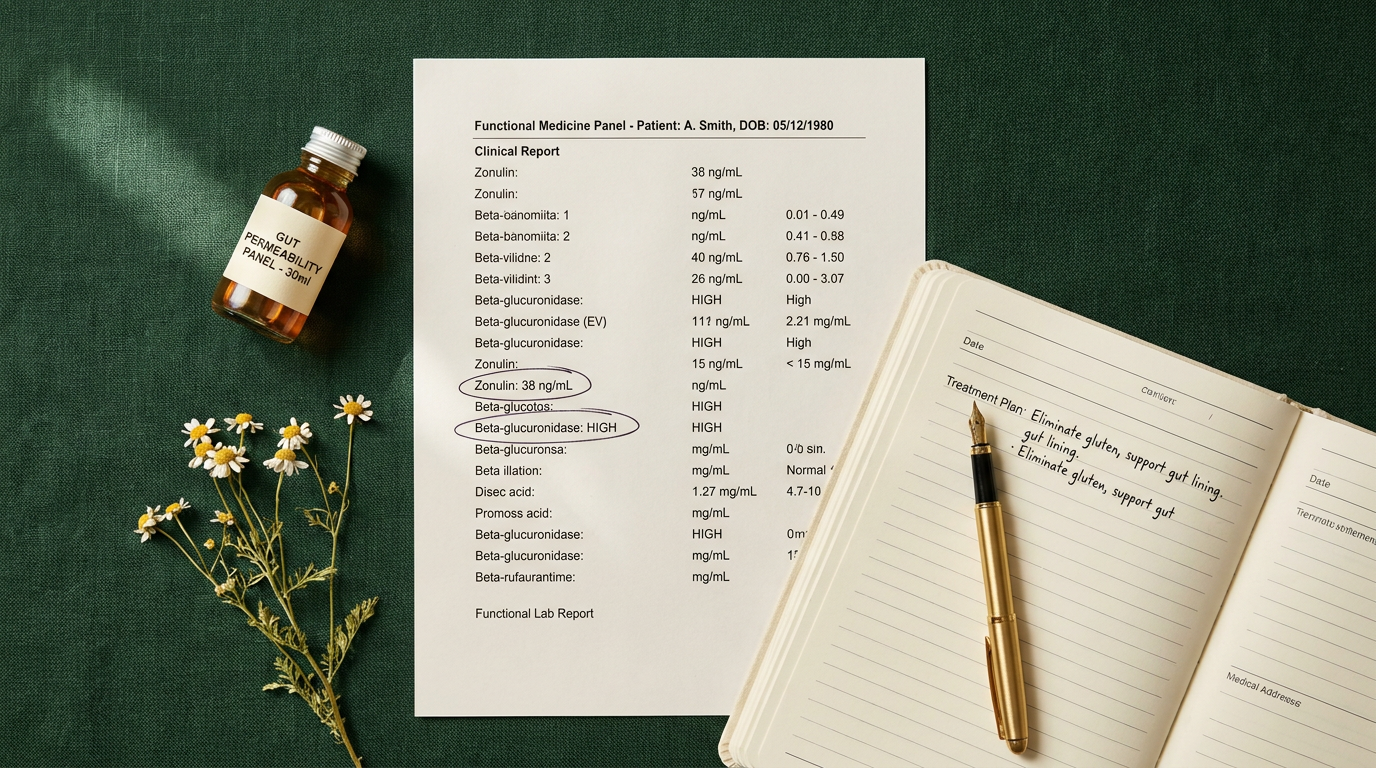
When we ran a comprehensive stool analysis, her beta-glucuronidase activity was significantly elevated. Lactobacillus species were nearly absent. Pathogenic bacterial overgrowth was present. Zonulin was elevated, confirming active gut permeability. We addressed the gut first, before touching her hormone protocol.
Within eight weeks, her estradiol had dropped without changing her progesterone dose. Within twelve weeks, her luteal phase symptoms were significantly reduced.
The gut was the missing piece. It almost always is.
A comprehensive review in Frontiers in Microbiology confirmed the bidirectionality here: the gut shapes hormone levels, and hormone levels shape the gut (He et al., 2021). This is why treating estrogen dominance without addressing the gut rarely produces lasting results.
LPS, the Cortisol Loop, and Why Your Stress System Stays Stuck
The second mechanism is less well known, but in my clinical experience it's the one that keeps women the most trapped. It involves a bacterial toxin called lipopolysaccharide, the HPA axis, and a feedback loop that keeps the nervous system in a chronic state of activation regardless of how much sleep you get, how much you meditate, or how much you've reduced your external stressors.
What LPS does when the gut barrier breaks down
Lipopolysaccharide (LPS) is a component of the outer membrane of gram-negative bacteria. In a healthy gut, LPS stays in the intestinal lumen where it belongs. When the gut barrier is compromised, LPS passes through the intestinal wall and enters systemic circulation. This is called endotoxemia.
Research published in Frontiers in Immunology established that stress-induced increases in intestinal permeability lead to endotoxemia and low-grade systemic inflammation via LPS translocation (De Punder and Pruimboom, 2015). This isn't a dramatic, acute infection. It's a slow, chronic drip of inflammatory signal that the immune system responds to continuously. Most standard labs won't catch it because it falls below the threshold for flagging as abnormal on a CRP or ESR test.
How LPS hijacks the HPA axis
The HPA axis is your body's primary stress response system. It regulates cortisol production. And it is exquisitely sensitive to inflammatory signals, including LPS.
When LPS enters circulation, it binds to toll-like receptor 4 (TLR4) on immune cells, triggering the release of pro-inflammatory cytokines including TNF-alpha, IL-1beta, and IL-6. These cytokines directly stimulate the HPA axis, driving cortisol release. A 2025 study in the Journal of Applied Physiology confirmed that chronic stress activates the HPA axis, increases intestinal permeability, and allows LPS to enter circulation, which in turn sustains cortisol elevation and perpetuates the cycle (Marwaha et al., 2025).
The loop: stress increases gut permeability, gut permeability increases LPS, LPS drives cortisol, elevated cortisol further disrupts the gut barrier. It continues. The clinical consequence is a woman whose cortisol is dysregulated not because her life is currently stressful, but because her gut has been leaking LPS for months or years. Her HPA axis is responding to an internal inflammatory signal. Telling her to reduce stress doesn't reach the actual driver.
What this looks like in practice
Women in this pattern often present with what I think of as the exhausted-but-wired picture. They can't fall asleep despite being exhausted. They wake between 2 and 4am. They have anxiety that doesn't match their circumstances. Their cortisol rhythm is either flat throughout the day or inverted, high at night when it should be low.
On a functional cortisol test, these women often show elevated evening cortisol, blunted morning cortisol, or unpredictable spikes. Their hs-CRP is often mildly elevated, somewhere between 1.5 and 3.0 mg/L, which most conventional practitioners dismiss as insignificant. A landmark UCLA study following 65 women through the menopause transition found that gut permeability markers increased significantly from pre- to postmenopause, and greater gut permeability was associated with greater systemic inflammation (Shieh et al., 2020).
What makes this loop particularly difficult to break is that cortisol itself damages the gut lining. Elevated cortisol downregulates secretory IgA (sIgA), the immune protein that lines the gut and protects against pathogen overgrowth. When sIgA drops, dysbiosis worsens. When dysbiosis worsens, permeability increases. When permeability increases, more LPS enters circulation. More LPS means more cortisol stimulation. The loop tightens.
This is why women in this pattern don't respond to adrenal support protocols alone. The gut has to be part of the intervention.
The Gut-Thyroid Connection and Hashimoto's
The third mechanism is the one that surprises women most when I explain it. The connection between intestinal permeability and thyroid autoimmunity is one of the most well-documented relationships in functional medicine research. It's almost never discussed in conventional thyroid care.
Why autoimmunity needs three things to develop
Autoimmune disease doesn't develop from a single cause. Research supports a three-hit model: genetic susceptibility, a triggering event, and intestinal permeability. All three are required. The genetic susceptibility determines which tissue the immune system targets. The triggering event activates the immune response. But intestinal permeability is what allows that immune activation to become systemic and self-sustaining.
When the gut barrier is compromised, large molecules including partially digested food proteins, bacterial fragments, and microbial antigens pass into the bloodstream. The immune system mounts a response. In genetically susceptible individuals, some of these foreign antigens share structural similarities with thyroid tissue. The immune system, in attacking the foreign antigen, also attacks the thyroid. This is called molecular mimicry, and it's one of the primary mechanisms behind Hashimoto's thyroiditis.
Research published in Frontiers in Immunology found that patients with Hashimoto's had measurably altered gut microbiota and increased intestinal permeability compared to healthy controls, with elevated zonulin as a key finding (de Freitas Cayres et al., 2021). Elevated zonulin means the gate is open and the immune system is continuously exposed to gut-derived antigens that sustain the autoimmune response.
A 2024 review in Clinical and Experimental Medicine found that improving gut barrier integrity through microbiome-targeted interventions reduced thyroid antibody levels in multiple studies (Zhu et al., 2024). TPO and TgAb antibodies, which conventional medicine treats as a fixed feature of Hashimoto's, can come down when the gut is addressed. That's not a theory. It's in the research.
In practice, I look at several markers when evaluating this connection: TPO-Ab and TgAb (functional target below 35 IU/mL), zonulin (below 30 ng/mL), secretory IgA (above 510 mcg/mL), and a comprehensive stool analysis for microbiome diversity and balance.
The nutrient absorption piece
There's a secondary mechanism worth naming. The thyroid requires specific nutrients to function: iodine, selenium, zinc, and iron are the primary ones. All absorbed in the small intestine. When the gut lining is damaged, absorption is impaired. Women with intestinal permeability are frequently deficient in the exact nutrients their thyroid needs to produce and convert thyroid hormones.
Selenium is particularly important. It's required for the conversion of T4 to T3, the active form, and it's a cofactor for the antioxidant enzymes that protect the thyroid during hormone production. A woman with intestinal permeability who is selenium-deficient will have impaired T4-to-T3 conversion, elevated reverse T3, and thyroid symptoms even when her TSH looks completely normal. The functional lab picture for this includes selenium below 110 mcg/L, zinc below 70 mcg/dL, ferritin below 50 ng/mL, and a free T3 to reverse T3 ratio below 20.
One Lever You Can Pull Right Now
Before running any labs, before starting any supplements, there is one intervention that costs nothing and directly addresses all three mechanisms above. It takes four days.
Remove the four most common gut barrier disruptors for four days: gluten, dairy, alcohol, and NSAIDs (ibuprofen, aspirin, naproxen).
Gluten is the most researched. Gliadin, a protein in gluten, directly triggers zonulin release in the gut lining, opening tight junctions and increasing permeability. This happens in everyone to some degree, not only in people with celiac disease. For women with Hashimoto's, the molecular mimicry between gliadin and thyroid tissue is particularly well-documented.
NSAIDs are the most overlooked. Ibuprofen and related drugs are among the most potent pharmaceutical drivers of intestinal permeability. They inhibit prostaglandin synthesis in the gut lining, which reduces the protective mucus layer and allows inflammatory damage to the epithelium. Women who take ibuprofen regularly for menstrual cramps, which is extremely common in estrogen-dominant women, are perpetuating the gut permeability that is driving their estrogen dominance.
For four days, also add three gut-supportive foods: bone broth, fermented vegetables (sauerkraut or kimchi, unpasteurized), and cooked leafy greens.
Bone broth provides glycine and glutamine, the primary amino acids intestinal epithelial cells use for repair. Fermented vegetables provide live Lactobacillus species that produce short-chain fatty acids, particularly butyrate, which feeds colonocytes and supports tight junction protein expression. Cooked leafy greens provide magnesium, required for cortisol regulation and progesterone production. Most women with this pattern are magnesium-deficient.
Keep a simple log during the four days: energy on waking (1-10), bloating after meals (none, mild, moderate, severe), sleep quality, and afternoon mood. Many women notice within 48 hours that bloating decreases when gluten and dairy come out. That rapid shift is a clinical signal. It tells you the gut lining is reactive and that active permeability is part of your picture.
The four-day protocol isn't a cure. It's a diagnostic tool and a starting point. If you feel measurably better, that's clinical information. If you feel no different, that doesn't mean the gut isn't involved. It may mean the permeability is more entrenched, or that other mechanisms are dominant. That's when functional testing becomes essential.
What Mind Body Restored Does Differently
Most practitioners treat the gut and the hormones as separate systems because that's how medical training is organized. At Mind Body Restored, we look at the whole picture from the beginning. We run functional medicine specialized labs so that we can see exactly what is happening: a comprehensive stool analysis that measures gut permeability markers, dysbiosis, and beta-glucuronidase activity; a four-point cortisol test that maps the HPA axis rhythm; a comprehensive thyroid panel that includes TPO antibodies, TgAb, free T3, free T4, and reverse T3; and a micronutrient panel that identifies the specific deficiencies driving the pattern.
The goal is not to manage symptoms. The goal is to identify the root cause, address it directly, and help your body return to a state where it can regulate itself.
Dr. Jaday Garcia, PhD, BCDNM, 2026 Global Recognition Award Winner, has spent her career working with women whose labs were normal while their bodies were telling a very different story. If you recognize yourself in this article, the next step is a Body SOS Call.
Disclaimer: This article is for educational purposes only and does not constitute medical advice. Always consult a qualified healthcare provider before making changes to your health protocol.