You Are Not Falling Apart. You Are Inflamed. The Hidden Driver Behind Every Symptom Your Doctor Cannot Explain
By Dr. Jaday Garcia, PhD, BCDNM. 2026 Global Recognition Award Winner Published: July 14, 2026 | Last Updated: July 2026 | 19 min read
You have been to the doctor. Maybe three doctors. You have had bloodwork done twice this year. Your CBC is fine. Your thyroid panel came back "within range." Your metabolic panel looks unremarkable. And yet you are sitting in your car after the appointment wondering why you still feel like you are running on fumes.
The fatigue is constant. The brain fog rolls in by 2 p.m. Your joints ache for no clear reason. Your skin flares up at random. You bloat after meals that used to sit fine. You crash after workouts that used to energize you. And every provider you see tells you the same thing: labs are normal.
Here is what I want you to hear. You are not making this up. You are not anxious. You are not "just stressed." And you are not falling apart. What you are experiencing has a name that most conventional providers are not trained to look for at this stage. It is called chronic low-grade inflammation, and it is the single most overlooked driver of the symptoms that bring women into my practice every single week.
In my clinical work, I see a pattern repeat itself over and over. A woman comes in with a list of symptoms that span multiple body systems. Fatigue. Hormonal disruption. Gut issues. Sleep problems. Mood instability. She has been told these are separate issues. She has been given separate referrals. But when I run the right labs and look at the full picture, the thread connecting all of it is the same: her body is inflamed, and nobody caught it because standard bloodwork was never designed to detect it at this level.
In this article, I am going to walk you through three mechanisms that explain how chronic inflammation silently drives the symptoms you have been told are "normal." I will show you the connection between your stress response and your immune system, the role your gut plays in fueling systemic inflammation, and why your hormones make you more vulnerable to inflammatory damage than your male counterparts. Then I will give you one actionable lever you can pull this week to start calming the fire.
Mechanism 1: The HPA-Immune Loop. How Chronic Stress Lights the Inflammatory Match
Most women I work with do not think of themselves as "stressed." They are functioning. They are managing. They are holding it together. But their biology tells a different story. Their cortisol rhythm is disrupted. Their nervous system is locked in a low-grade sympathetic state. And their immune system has been quietly activated for months or years without anyone noticing.
Here is how this works at the cellular level. When your brain perceives a threat, whether that threat is a deadline, a difficult relationship, financial pressure, or sleep deprivation, it activates your hypothalamic-pituitary-adrenal (HPA) axis. This is your central stress response system. (I wrote about this in depth in my post on adrenal fatigue and HPA axis dysfunction.) It signals your adrenal glands to release cortisol, which is supposed to be a short-term protective hormone. Cortisol rises, handles the threat, and then comes back down. That is the healthy version.
But when the threat never stops, something shifts. Your HPA axis stops responding normally. Research published in Comprehensive Physiology found that women show greater variability in stress-induced HPA axis activity than men, and that chronic stress leads to a phenomenon called glucocorticoid resistance [1]. This means your cells stop responding to cortisol the way they should. Cortisol is still circulating, but your immune cells no longer hear the "stand down" signal.
This is where inflammation enters the picture. Cortisol is supposed to keep your immune system in check. It is one of your body's most powerful anti-inflammatory signals. But when your cells become resistant to it, your immune system loses its brake pedal. Pro-inflammatory cytokines, specifically interleukin-6 (IL-6) and tumor necrosis factor-alpha (TNF-alpha), begin to rise. These are not the dramatic inflammatory markers you see in acute infection. They are subtle. They are low-grade. And they are persistent.
A landmark review published in Frontiers in Immunology demonstrated that these cytokines act directly on the central nervous system, inducing behavioral changes including fatigue, reduced motivation, cognitive slowing, and social withdrawal [2]. The researchers found that inflammation-induced fatigue is not a psychological phenomenon. It is a neurological one. Your brain is responding to inflammatory signals by conserving energy, the same way it would if you had the flu. Except you do not have the flu. You have a stress response that never turned off.
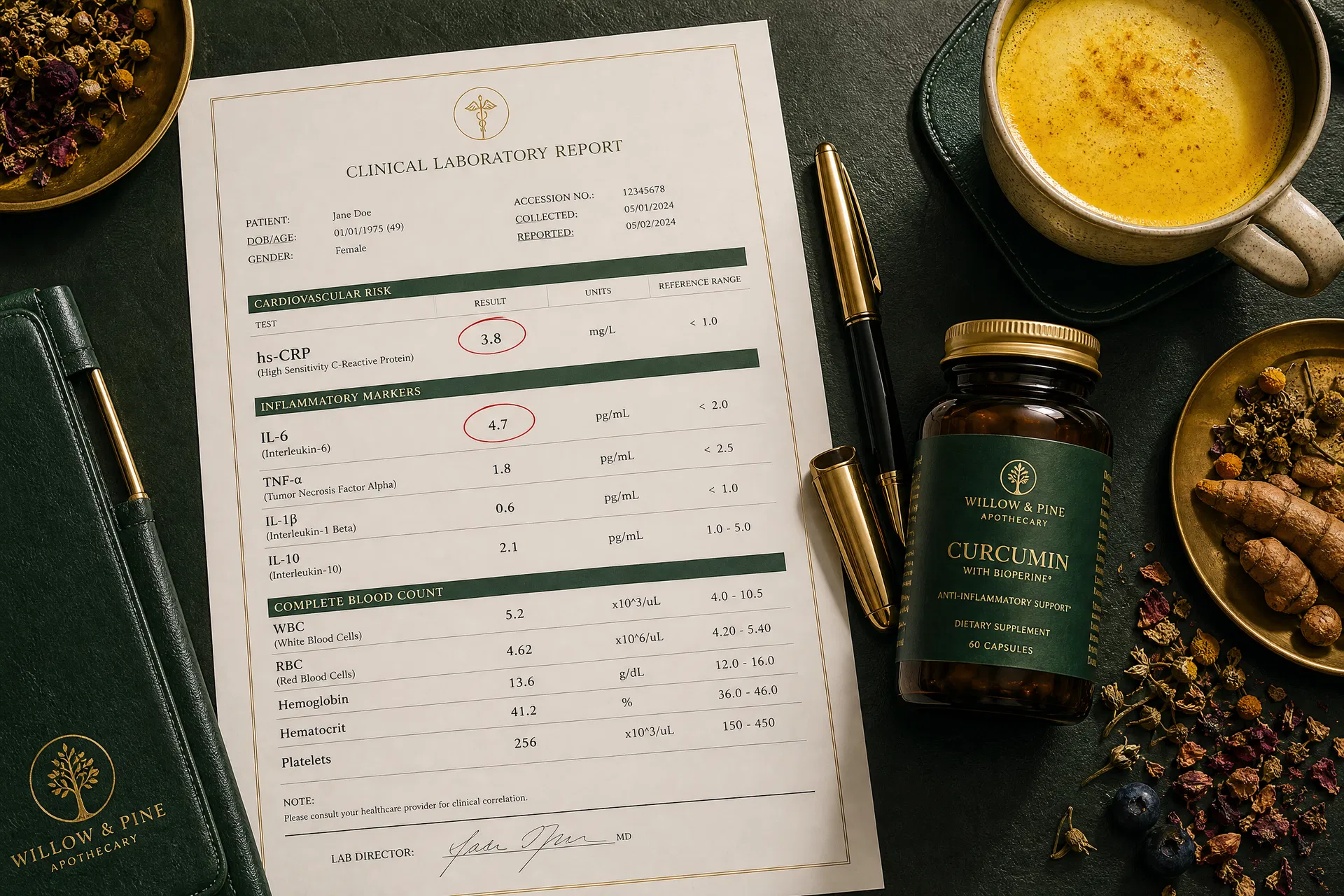
What makes this particularly insidious is that standard lab panels rarely catch it. A basic CRP test might come back "normal" because the inflammation is not high enough to flag a disease state. But a high-sensitivity CRP (hs-CRP), combined with cytokine panels, often tells a completely different story. In my practice, I regularly see women with hs-CRP levels between 1.5 and 3.0 mg/L. Technically "normal" by conventional standards. But research increasingly suggests that levels above 1.0 mg/L indicate clinically meaningful low-grade inflammation [3].
The research is clear on this point. A 2018 study in Frontiers in Behavioral Neuroscience found that chronic low-grade inflammation induces persistent fatigue by creating an imbalance between cellular-energy availability and non-adaptive energy expenditure [4]. In plain language: your body is spending energy fighting an invisible fire instead of giving that energy to you. Your mitochondria are being taxed. Your neurotransmitter production is being diverted. And you feel it as exhaustion that no amount of sleep can fix.
I had a client last year, a 38-year-old attorney, who had been told by three different providers that her fatigue was "probably just stress." Her standard labs were pristine. When we ran a four-point salivary cortisol test alongside hs-CRP and a cytokine panel, the picture was completely different. Her morning cortisol was blunted (she was not getting that wake-up surge), her hs-CRP was 2.4, and her IL-6 was elevated. She was not "just stressed." Her stress response had crossed over into an inflammatory state that was actively suppressing her energy production.
What I find most telling in clinical practice is the pattern of symptom onset. When I ask these women, "When did you start feeling this way?" the answer is almost never "overnight." It was gradual. It crept in over months. First the sleep got a little worse. Then the energy dipped. Then the brain fog appeared. Then the motivation faded. This is the signature of inflammatory fatigue. It builds slowly because the cytokine elevation builds slowly. By the time you notice something is wrong, the loop has been running for months.
Another pattern I see frequently: women who exercise intensely and feel worse afterward instead of better. This is a hallmark of inflammation-driven fatigue. When your baseline inflammatory load is already elevated, intense exercise adds an acute inflammatory spike on top of a chronic one. Your body cannot recover the way it used to because the recovery systems are already overwhelmed. If you used to thrive on high-intensity training and now you crash for two days after a hard workout, that is not deconditioning. That is your immune system telling you it is already maxed out.
This is the first mechanism I want you to understand. Chronic stress does not just make you feel tired. It changes your immune chemistry. It activates inflammatory pathways that standard bloodwork was never designed to detect. And it creates a self-perpetuating loop: inflammation causes fatigue, fatigue increases stress, stress drives more inflammation.
Mechanism 2: Gut Permeability and Systemic Inflammation. The Endotoxin Connection
If the HPA-immune loop is the match, your gut is the gasoline. And this is where the picture gets both more complex and more actionable.
Your intestinal lining is a single-cell-thick barrier. One layer of cells is all that separates the contents of your digestive tract, including bacteria, food particles, and bacterial toxins, from your bloodstream. When that barrier is intact, it selectively allows nutrients through while keeping everything else contained. When that barrier is compromised, a condition researchers call increased intestinal permeability, things that should never enter your bloodstream start leaking through. I covered the full gut-hormone connection in this earlier post, but here I want to focus specifically on the inflammatory cascade.
The most significant of these is lipopolysaccharide, or LPS. LPS is a component of the outer membrane of gram-negative bacteria, and it is abundant in your gut. Under normal conditions, it stays safely contained within your intestinal tract. But when your gut barrier is compromised, LPS translocates into your circulation. This is called metabolic endotoxemia, and it is one of the most well-documented drivers of systemic inflammation in the research literature.
A comprehensive review published in Frontiers in Immunology in 2021, cited over 700 times, established that increased intestinal permeability directly drives systemic endotoxemia [5]. The researchers demonstrated that even small amounts of LPS in circulation activate toll-like receptor 4 (TLR4) on immune cells throughout your body. This triggers a cascade of inflammatory signaling that affects every organ system, from your brain to your joints to your skin.
What causes the gut barrier to break down in the first place? The research points to several factors that are extremely common in the women I work with. Chronic psychological stress (which we just discussed) directly increases intestinal permeability through cortisol-mediated mechanisms. A 2024 review in Internal and Emergency Medicine, cited nearly 1,600 times, confirmed that LPS itself promotes further intestinal inflammation and disrupts tight junction organization [6]. This creates another vicious cycle: stress damages the gut, the damaged gut leaks LPS, LPS drives inflammation, inflammation damages the gut further.
Dr. Alessio Fasano's groundbreaking work on zonulin, published in F1000Research, identified this protein as a master regulator of intestinal permeability [7]. Zonulin is released in response to certain triggers, including gluten exposure and bacterial overgrowth, and it literally opens the spaces between your intestinal cells. Fasano's research, cited over 670 times, linked zonulin-mediated permeability to the development of multiple chronic inflammatory diseases.
Here is what this looks like in practice. A woman comes to me with bloating, fatigue, joint pain, and brain fog. Her gastroenterologist scoped her and found nothing. Her rheumatologist ran an ANA panel and it was negative. But when I test her zonulin levels, her LPS antibodies, and her secretory IgA, the picture becomes clear. Her gut barrier is compromised. Bacterial endotoxins are entering her circulation. And her immune system is in a constant state of low-level activation trying to deal with it.
The connection between gut permeability and fatigue is not theoretical. A study on chronic fatigue syndrome found that normalization of leaky gut was accompanied by clinical improvement, and that the degree of improvement correlated with the reduction in LPS translocation [8]. This tells us something critical: when you seal the gut barrier and stop the endotoxin leak, the inflammation calms down and energy returns.
A 2020 review in the Journal of the Endocrine Society, cited over 960 times, summarized the evidence clearly: LPS from gut bacteria is responsible for causing systemic inflammation and is linked to metabolic syndrome, cardiovascular disease, and chronic fatigue [9]. The researchers emphasized that this is not a fringe theory. It is a well-established mechanism with decades of supporting evidence.
In my clinical experience, gut permeability is present in roughly 70% of the chronically fatigued women I evaluate. It is rarely the only factor, but it is almost always a contributing one. And it is entirely addressable once you know it is there.
What surprises most of my clients is how many of their "unrelated" symptoms trace back to this one mechanism. The joint pain that their rheumatologist could not explain? LPS activates inflammatory pathways in synovial tissue. The skin breakouts that come and go without any clear trigger? Systemic inflammation increases sebum production and disrupts skin barrier function. The brain fog that makes them feel like they are thinking through cotton? Inflammatory cytokines cross the blood-brain barrier and directly impair prefrontal cortex function. These are not separate problems requiring separate specialists. They are one problem expressing itself in multiple tissues.
I also want to address something I hear frequently: "But I do not have digestive symptoms." Here is what many women do not realize. You can have significant gut permeability without obvious gut symptoms. Not everyone with a compromised intestinal barrier has bloating or diarrhea. Some women present primarily with fatigue, joint pain, skin issues, or mood changes, and the gut connection only becomes apparent when we run the labs. This is why I test gut permeability markers in nearly every chronically fatigued patient, regardless of whether they report digestive complaints.
The practical implication is this: if you have unexplained fatigue, whether or not it comes with digestive symptoms, there is a meaningful probability that your gut barrier is compromised and that bacterial endotoxins are fueling a systemic inflammatory response. This will not show up on a standard metabolic panel. It requires specific functional testing that most conventional providers do not order. (I walk through the exact labs and optimal ranges in my post on functional lab testing for women.)
Mechanism 3: Estrogen, Progesterone, and the Inflammatory Amplifier. Why Women Bear the Burden
There is a reason chronic inflammatory conditions disproportionately affect women. It is not because women are more "sensitive" or more likely to report symptoms. It is because female sex hormones directly modulate the immune system in ways that can either protect against or amplify inflammation, depending on where you are in your cycle, your life stage, and your overall hormonal balance.
Let me explain the two sides of this equation.
Estrogen is an immune activator. A comprehensive review published in Steroids in 2022, cited over 310 times, demonstrated that estrogens interact with and regulate both inflammation and immunity [10]. At normal physiological levels, estrogen supports healthy immune surveillance. But when estrogen is elevated relative to progesterone (a state called estrogen dominance that is extremely common in stressed, perimenopausal, or gut-compromised women), it pushes the immune system toward a pro-inflammatory, autoimmune-type response.
Estrogen does this through several mechanisms. It enhances the production of pro-inflammatory cytokines. It activates B cells and promotes antibody production. It modulates the NF-kB pathway, which is the master switch for inflammatory gene expression [10]. This is why autoimmune conditions are 2 to 10 times more common in women than in men. It is not bad luck. It is biology. (I explore this hormonal vulnerability further in my post on the gut-hormone connection.)
Now consider progesterone. Progesterone is estrogen's counterbalance. A systematic review published in Frontiers in Medicine in 2023 confirmed that progesterone acts in an immunosuppressive way, favoring an anti-inflammatory cytokine profile [11]. It inhibits mast cell degranulation (which reduces histamine and allergic-type reactions). It promotes immune tolerance. It is, in many ways, your body's built-in anti-inflammatory hormone.
Research published in Mucosal Immunology further demonstrated that progesterone decreases inflammation by directly inhibiting the production of TNF-alpha, interferon-gamma, and IL-12 [12]. These are the same pro-inflammatory cytokines that the HPA-immune loop activates when you are chronically stressed. Progesterone is supposed to keep them in check.
Here is the problem. Chronic stress suppresses progesterone production. Your body preferentially shunts pregnenolone (the precursor to both cortisol and progesterone) toward cortisol production when it perceives ongoing threat. This is the same mechanism I describe in my post on nervous system dysregulation and chronic symptoms. This is sometimes called the "pregnenolone steal." The result is that stressed women end up with relatively high estrogen and relatively low progesterone. They lose their anti-inflammatory protection at the exact moment their pro-inflammatory signaling is amplified.
This creates a perfect storm. Elevated estrogen activates the immune system and promotes inflammatory cytokine production. Depleted progesterone removes the brake on that inflammation. And the chronic stress that caused the hormonal shift in the first place has already activated the HPA-immune loop and compromised the gut barrier. All three mechanisms converge.
In my practice, I see this pattern most dramatically in two populations: women in their late 30s to mid-40s approaching perimenopause, and women with significant chronic stress regardless of age. Their progesterone is declining (either from age-related changes or stress-mediated suppression), their estrogen is relatively dominant, and their inflammatory markers are quietly elevated. They feel terrible. Their labs look "fine." And they have been told it is just perimenopause, just stress, or just aging.
It is none of those things. It is inflammation driven by a hormonal environment that has lost its protective balance.
I want to be specific about what this looks like on labs. When I run a full hormone panel on these women, I typically see progesterone in the luteal phase below 8 ng/mL (optimal is 15-25). I see estradiol that is either elevated or fluctuating wildly. I see a progesterone-to-estradiol ratio that is inverted from what it should be. And when I pair that with inflammatory markers, the correlation is striking. The women with the lowest progesterone-to-estradiol ratios consistently have the highest hs-CRP and the most severe symptom burden.
This is not a coincidence. It is a mechanism. And it explains why so many women feel worse in the week before their period (when progesterone drops), worse during perimenopause (when progesterone declines permanently), and worse during high-stress seasons (when cortisol steals progesterone's precursor).
The takeaway is this: your hormones are not separate from your inflammation. They are driving it. And until someone looks at both systems together, you will keep getting fragmented answers that never add up to a solution.
The 72-Hour Inflammation Audit: One Lever You Can Pull This Week
I am not going to give you a supplement list or a meal plan. What I am going to give you is a framework for identifying your personal inflammatory triggers so you can start reducing the load on your immune system immediately.
For the next 72 hours, I want you to track three things. Write them down. Use your phone notes. Use a journal. The format does not matter. What matters is that you pay attention.
Track your food timing and composition. Not calories. Not macros. I want you to notice: How long do you go between meals? Do you eat within an hour of waking? Do you crash 90 minutes after eating? Blood sugar instability is one of the fastest ways to trigger inflammatory cytokine release. (I wrote an entire post on how blood sugar drives hormonal chaos if you want the full picture.) If you are skipping breakfast, relying on coffee until noon, and then crashing hard in the afternoon, your blood sugar is spiking and dropping in ways that activate NF-kB signaling every single day.
Track your sleep quality and your morning state. Are you waking between 2 and 4 a.m.? Are you waking with a racing heart or feeling wired? Are you groggy for the first two hours of the day? These patterns tell me about your cortisol rhythm, which directly controls your inflammatory tone. A blunted morning cortisol response means your immune system is not getting its daily "reset" signal. An elevated nighttime cortisol means your inflammatory cytokines are running unchecked during the hours your body is supposed to be repairing. (If you are waking between 2 and 4 a.m., I break down exactly why in this post on cortisol and 3am wake-ups.)
Track your symptom flares in relation to your cycle. If you menstruate, notice whether your fatigue, brain fog, joint pain, or skin issues worsen in the 5 to 7 days before your period. This is the window when progesterone drops and your anti-inflammatory protection disappears. If your symptoms consistently worsen premenstrually, it tells me your inflammatory load is being held in check by progesterone during the rest of your cycle, and the moment that protection drops, the inflammation becomes symptomatic.
After 72 hours, look at your notes. You will likely see a pattern. Maybe it is blood sugar crashes driving afternoon inflammation. Maybe it is disrupted sleep preventing overnight repair. Maybe it is a clear premenstrual flare that points to hormonal-inflammatory overlap. Whatever the pattern is, it gives you a starting point. It tells you which of the three mechanisms we discussed is most active in your body right now.
Here is what to do with what you find. If your pattern points to blood sugar instability (crashing energy 60 to 90 minutes after meals, needing caffeine to function, feeling shaky or irritable between meals), your immediate lever is meal composition. Add protein and fat to every meal and snack. Eat within 60 minutes of waking. Do not let more than 4 hours pass between eating. This alone can reduce NF-kB activation within days.
If your pattern points to sleep disruption (waking between 2 and 4 a.m., waking with anxiety, unrefreshing sleep), your lever is nervous system regulation before bed. Ten minutes of slow, extended-exhale breathing (inhale for 4 counts, exhale for 8 counts) activates your parasympathetic nervous system and lowers cortisol. Do this consistently for one week and track whether your wake-ups decrease.
If your pattern points to premenstrual flares, your lever is reducing your total inflammatory load during the luteal phase. This means being more intentional about sleep, reducing alcohol (which spikes estrogen and suppresses progesterone), and avoiding high-intensity exercise in the 7 days before your period. Your body needs less stimulation during this window, not more.
This is not a diagnosis. This is awareness. And awareness is the first step toward intervention that actually matches what your body is doing.
This Is Not Something You Should Navigate Alone
If what you just read resonated with you, if you recognized yourself in these patterns, I want you to know something. You are not broken. Your body is doing exactly what it is designed to do in response to the conditions it has been placed in. The problem is not you. The problem is that nobody has looked at the full picture.
Chronic inflammation does not resolve with willpower. It does not resolve with another supplement from the health food store. It resolves when someone identifies which mechanisms are active in your specific body, runs the right labs to confirm what is happening at the cellular level, and builds a protocol that addresses the root cause instead of masking the symptoms.
That is exactly what we do in Body Fix. If you are ready to stop guessing and start getting answers, I invite you to take the Pattern Quiz to identify which energy pattern is leading your symptoms. Or if you already know you need support, book a Pattern Review call and let's look at what is actually going on.
Dr. Jaday Garcia, PhD, BCDNM, is a board-certified doctor of natural medicine, functional medicine practitioner, and 2026 Global Recognition Award Winner. She specializes in helping women who are still getting everything done resolve chronic fatigue, hormonal disruption, and nervous system dysregulation through root-cause protocols.
Frequently Asked Questions
What is chronic low-grade inflammation, and how is it different from acute inflammation?
Acute inflammation is your body's short-term response to injury or infection. You cut your finger, it swells, it heals, the inflammation resolves. Chronic low-grade inflammation is a persistent, subtle activation of your immune system that does not resolve on its own. It does not cause dramatic symptoms like fever or visible swelling. Instead, it produces a constant low-level release of inflammatory cytokines (IL-6, TNF-alpha) that gradually disrupts energy production, hormone balance, brain function, and gut health. Standard bloodwork often misses it because the markers are not elevated enough to flag a disease state, even though they are elevated enough to make you feel terrible.
Can chronic inflammation cause fatigue even when blood tests are normal?
Yes. This is one of the most common presentations I see in my practice. Standard blood panels test for disease-level inflammation (very high CRP, elevated white blood cells). But the research clearly shows that even modest elevations in inflammatory cytokines, levels that fall within "normal" reference ranges, can directly suppress mitochondrial energy production and alter brain chemistry in ways that produce profound fatigue [4]. A high-sensitivity CRP (hs-CRP) test, combined with cytokine panels and functional gut markers, provides a much more accurate picture of your inflammatory status than standard bloodwork alone.
What labs should I ask for to check for silent inflammation?
The most informative markers I run in my practice include: high-sensitivity C-reactive protein (hs-CRP), with optimal being below 1.0 mg/L; fasting insulin and HOMA-IR (insulin resistance drives inflammation); a comprehensive thyroid panel including free T3 and reverse T3; zonulin or lactulose-mannitol testing for gut permeability; and a four-point salivary cortisol test to assess HPA axis function. For women with hormonal symptoms, I also run a full hormone panel including progesterone, estradiol, and their ratio, because hormonal imbalance directly amplifies inflammatory signaling.
Why does inflammation get worse before my period?
Progesterone is your body's natural anti-inflammatory hormone. It actively suppresses pro-inflammatory cytokines like TNF-alpha and IL-12 [12]. In the luteal phase of your cycle (the two weeks after ovulation), progesterone rises and provides anti-inflammatory protection. But in the 5 to 7 days before your period, progesterone drops sharply. If you have underlying chronic inflammation that progesterone was keeping in check, that drop unmasks the inflammation and your symptoms flare. This is why many women experience worsening fatigue, brain fog, joint pain, and mood instability premenstrually. It is not "just PMS." It is inflammation losing its hormonal brake.
Can you reverse chronic inflammation without medication?
In most cases, yes. The majority of chronic low-grade inflammation I see in practice is driven by modifiable factors: HPA axis dysregulation from chronic stress, gut barrier compromise from dietary and lifestyle factors, and hormonal imbalance from stress-mediated progesterone suppression. Addressing these root causes through nervous system regulation, gut barrier repair, blood sugar stabilization, and hormonal support can significantly reduce inflammatory markers within 8 to 12 weeks. Medication is rarely the first-line intervention for subclinical inflammation. Root-cause protocols that address why the inflammation is there in the first place are far more effective long-term.
References
[1] Herman JP, et al. "Regulation of the hypothalamic-pituitary-adrenocortical stress response." Comprehensive Physiology. 2016;6(2):603-621. PMC4867107
[2] Karshikoff B, Sundelin T, Lasselin J. "Role of Inflammation in Human Fatigue: Relevance of Multidimensional Assessments and Potential Neuronal Mechanisms." Frontiers in Immunology. 2017;8:21. Full text
[3] Del Giudice M, Gangestad SW. "Rethinking IL-6 and CRP: Why they are more than inflammatory biomarkers, and why it matters." Brain, Behavior, and Immunity. 2018;70:61-75. ScienceDirect
[4] Lacourt TE, et al. "The High Costs of Low-Grade Inflammation: Persistent Fatigue as a Consequence of Reduced Cellular-Energy Availability and Non-adaptive Energy Expenditure." Frontiers in Behavioral Neuroscience. 2018;12:78. PMC5932180
[5] Mohammad S, Thiemermann C. "Role of Metabolic Endotoxemia in Systemic Inflammation and Potential Interventions." Frontiers in Immunology. 2021;11:594150. Full text
[6] Di Vincenzo F, et al. "Gut microbiota, intestinal permeability, and systemic inflammation: a narrative review." Internal and Emergency Medicine. 2024;19:275-293. PMC10954893
[7] Fasano A. "All disease begins in the (leaky) gut: role of zonulin-mediated gut barrier function in the pathogenesis of some chronic inflammatory diseases." F1000Research. 2020;9:69. PMC6996528
[8] Ghosh SS, Wang J, Yannie PJ, Bhatt DL. "Intestinal Barrier Dysfunction, LPS Translocation, and Disease Development." Journal of the Endocrine Society. 2020;4(2):bvz039. Full text
[9] Ghosh SS, et al. (same as [8], referenced for the metabolic syndrome/fatigue connection)
[10] Harding AT, Heaton NS. "The Impact of Estrogens and Their Receptors on Immunity and Inflammation: An Overview." Steroids. 2022;177:108940. PMC8870346
[11] Zwahlen M, Stute P, et al. "Impact of progesterone on the immune system in women: a systematic review." Frontiers in Medicine. 2023;10:1191659. PMC10024519
[12] Hall OJ, et al. "Progesterone-based compounds affect immune responses and susceptibility to infections at diverse mucosal sites." Mucosal Immunology. 2017;10(5):1097-1107. Nature