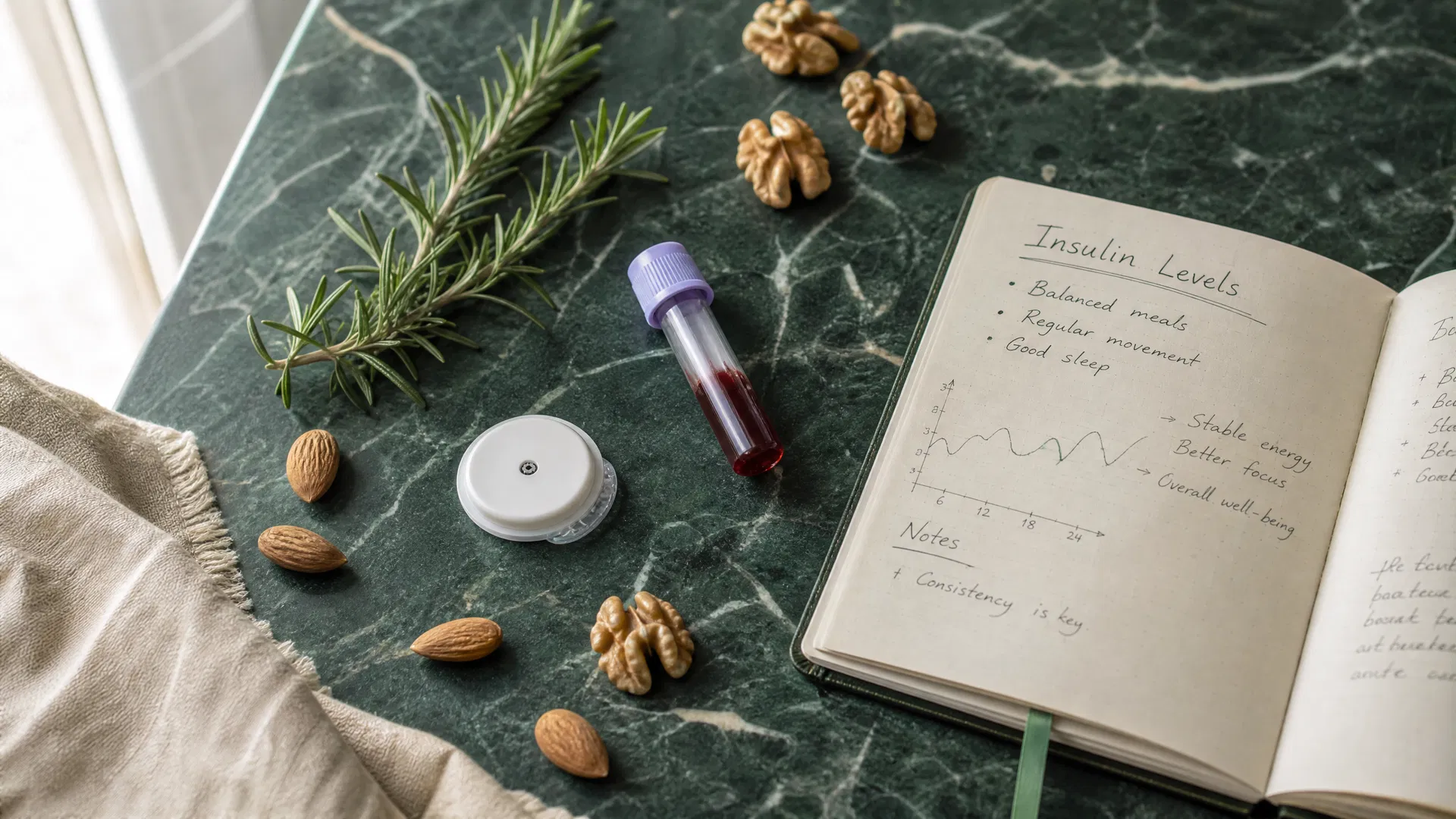
Your Blood Sugar Is Crashing Your Hormones. Here Is the Pattern Nobody Told You About.
By Dr. Jaday Garcia, PhD, BCDNM, 2026 Global Recognition Award Winner
Last Updated: July 2026 | 20 min read
You eat well. You exercise. You get your labs done every year and your doctor says everything looks fine. But you are gaining weight around your midsection that will not budge. Your energy crashes every afternoon around 2 or 3 pm. You feel shaky, irritable, or lightheaded between meals. Your periods are getting heavier, more irregular, or more painful. And nobody has connected these symptoms to one another.
That is because nobody has looked at your blood sugar and your hormones in the same conversation.
In my clinical practice, I see this pattern constantly. A woman comes in exhausted, hormonally disrupted, and frustrated. She has been told her thyroid is fine, her glucose is normal, and she just needs to eat less and move more. But when I run a fasting insulin, a HOMA-IR calculation, and a full hormone panel together, the picture changes completely. Her glucose might be 88 mg/dL, which looks perfect on paper. But her fasting insulin is 14 uIU/mL, which means her pancreas is working overtime to keep that glucose number looking normal. Her body is already in a state of metabolic stress that her standard labs completely missed.
This is not diabetes. This is not pre-diabetes by conventional standards. This is the space between "fine" and "falling apart" where most high-functioning women live for years before anyone catches it.
In this article, I am going to walk you through three mechanisms that explain how unstable blood sugar directly disrupts your hormones, your energy, and your nervous system. Then I will give you one practical lever you can pull this week to start shifting the pattern. If you have been told your labs are normal but your body disagrees, keep reading.
Mechanism 1: The Insulin-Hormone Hijack. How Elevated Insulin Steals Your Hormonal Balance
Most women think of insulin as a diabetes hormone. Something that only matters if your blood sugar is high. But insulin is far more powerful and far more disruptive than that. Insulin is a master regulator. When it stays elevated, even slightly above optimal, it rewires your entire hormonal landscape.
Here is what happens. When you eat, your blood sugar rises. Your pancreas releases insulin to move that glucose into your cells. In a healthy system, insulin spikes briefly, does its job, and comes back down. But when you eat frequently, when your meals are carbohydrate-heavy, when you are under chronic stress, or when you are not sleeping well, insulin stays elevated for longer periods. Over time, your cells stop responding as efficiently to insulin's signal. This is called insulin resistance. Your pancreas compensates by producing even more insulin. Now you have chronically elevated insulin circulating through your body, even though your blood glucose still looks normal on a standard lab panel.
This is where the hormonal damage begins.
Elevated insulin directly stimulates the ovaries to produce more testosterone. Research published in the Journal of Steroid Biochemistry and Molecular Biology demonstrated that insulin resistance and compensatory hyperinsulinemia are central to the pathogenesis of androgen excess in women with polycystic ovary syndrome. The study found that insulin acts directly on ovarian theca cells to upregulate the cytochrome P450c17 enzyme, which drives testosterone production [1]. This means your body is not randomly producing excess androgens. It is being instructed to do so by elevated insulin.
At the same time, elevated insulin suppresses sex hormone binding globulin (SHBG). SHBG is the protein that binds to testosterone and keeps it inactive in your bloodstream. When SHBG drops, more free testosterone circulates through your system. The result is a double hit: more testosterone being produced AND more of it being biologically active. This shows up clinically as acne along the jawline, thinning hair at the temples, stubborn belly fat, and irregular or absent periods.
A 2019 paper in the Journal of Metabolic Health confirmed this mechanism, stating that "excessive insulin causes both the overproduction of testosterone and decreased sex hormone binding globulin levels" in women [2]. The researchers emphasized that it is difficult for the body to balance estrogen, progesterone, and testosterone until insulin metabolism is balanced first.
I see this in practice constantly. A woman comes in with acne, hair loss, and irregular cycles. She has been prescribed birth control or spironolactone to manage the symptoms. But nobody has checked her fasting insulin. When I run it and see a level of 12, 15, or 18 uIU/mL (the optimal range is 2 to 7 uIU/mL), the entire clinical picture makes sense. Her hormonal symptoms are not random. They are downstream of a metabolic problem that started with insulin.
The conventional lab reference range for fasting insulin goes up to 25 uIU/mL. That means a woman with a fasting insulin of 20 will be told she is "normal." But research on HOMA-IR cut-off values published in BMC Endocrine Disorders found that insulin resistance begins to cause metabolic consequences at a HOMA-IR as low as 1.85 in men and 2.07 in women [3]. A HOMA-IR below 1.0 represents optimal insulin sensitivity. Most of the women I work with who are symptomatic have a HOMA-IR between 1.5 and 3.0. They are technically "normal" by lab standards but metabolically compromised by functional standards.
This is the gap that functional medicine fills. We are not waiting for disease. We are identifying the pattern while it is still reversible.
I had a client last year, a 34-year-old marketing director, who had been struggling with acne and hair thinning for two years. Her dermatologist prescribed topical treatments. Her gynecologist put her on birth control. Nobody ran a fasting insulin. When we tested it, her fasting insulin was 16 uIU/mL and her HOMA-IR was 2.4. Her testosterone was elevated at 68 ng/dL (optimal is under 45 for women). Within three months of addressing her insulin resistance through targeted nutrition and meal timing, her fasting insulin dropped to 8, her testosterone normalized at 38 ng/dL, and her acne cleared without any topical treatment. Her hair stopped falling out by month four. The hormonal symptoms were never the root problem. They were the downstream consequence of a metabolic pattern that nobody had identified.
What makes this even more frustrating is that insulin resistance is progressive. If you catch it when fasting insulin is 12, the intervention is straightforward: meal timing, protein prioritization, sleep optimization, and stress management. If you miss it and it progresses to a fasting insulin of 25 or 30, the intervention becomes more complex and takes longer. The earlier you identify the pattern, the easier it is to reverse. This is why I advocate for fasting insulin testing as part of every annual physical for women over 25, regardless of weight or family history.
Mechanism 2: The Blood Sugar Rollercoaster and Your Nervous System. How Glucose Crashes Trigger Cortisol Surges
You know the feeling. You eat lunch, feel fine for an hour, then suddenly you are foggy, irritable, shaky, and craving something sweet. That is not a willpower problem. That is reactive hypoglycemia, and it is activating your stress response every single time it happens.
Here is the physiology. When blood sugar drops too quickly after a meal, your body perceives it as a threat. The brain requires a constant supply of glucose to function. When glucose drops below a certain threshold, your adrenal glands release cortisol and adrenaline (epinephrine) as emergency backup. These hormones force your liver to dump stored glucose into the bloodstream to rescue your brain. This is a survival mechanism. It works. But it was designed for rare emergencies, not for something that happens three or four times a day.
A 2026 paper published in Nutrients characterizing postprandial reactive hypoglycemia defined it as "a rapid decline in blood glucose occurring 2 to 5 hours after food intake, often followed by counter-regulatory hormone responses including cortisol and epinephrine release" [4]. The researchers noted that this pattern is far more common than previously recognized, particularly in women with high-carbohydrate diets and irregular meal timing.
Every time your blood sugar crashes and your adrenals fire cortisol, your nervous system shifts into sympathetic dominance. Your heart rate increases. Your digestion slows. Your sleep architecture changes. Your body prioritizes survival over repair, reproduction, and recovery. If this happens multiple times daily for months or years, you develop what looks like chronic anxiety, insomnia, digestive issues, and hormonal disruption. But the root cause is metabolic instability triggering a stress response.
Research from the University of Chicago published in Sleep Medicine Clinics demonstrated that sleep restriction alone reduces glucose clearance rates by approximately 40% and decreases the acute insulin response to glucose by 30% [5]. The researchers found that glucose clearance rates during sleep restriction were similar to those reported for older adults with impaired glucose tolerance. This creates a vicious cycle: poor sleep makes blood sugar worse, unstable blood sugar disrupts sleep, and both activate the HPA axis.
I had a client, a 38-year-old attorney, who came to me with what she described as "sudden onset anxiety." She had never been anxious before. She started waking at 3am with a racing heart. She felt jittery between meals. Her doctor prescribed an SSRI. But when we tracked her glucose with a continuous monitor for two weeks, we found that her blood sugar was dropping into the 50s and 60s between meals and overnight. Every single "anxiety attack" correlated with a glucose crash followed by a cortisol surge. Her nervous system was not broken. It was responding appropriately to a metabolic emergency that was happening multiple times per day.
The connection between glucose variability and cognitive symptoms is well documented. Research published in Diabetes Care found that glucose variability is associated with cognitive impairment, hypothesized to be related to increased production of reactive oxygen species and inflammatory markers in the brain [6]. The participants with the highest glucose variability reported significantly more fatigue, brain fog, and difficulty concentrating than those with stable glucose patterns.
This is why I tell my clients: if you feel anxious 90 minutes after eating, that is not anxiety. That is your blood sugar crashing and your adrenals compensating. The solution is not a medication. The solution is stabilizing the metabolic pattern that is triggering the stress response in the first place.
Another pattern I see frequently is the woman who reports that she "cannot fast" or feels terrible if she skips breakfast. She has been told that intermittent fasting is healthy and she should be able to do it. But every time she tries, she feels shaky, nauseous, irritable, and unable to concentrate by 10am. This is not a failure of willpower or discipline. This is her body telling her that her blood sugar regulation is too fragile to handle an extended period without food. Her liver glycogen stores are depleted from chronic cortisol output overnight, and without incoming glucose from food, her body has to rely entirely on stress hormones to maintain blood sugar. For this woman, eating breakfast within 30 minutes of waking is not optional. It is a nervous system intervention.
The 3am wake-up pattern is another classic sign of this mechanism. When blood sugar drops too low during sleep, typically between 2 and 4am, cortisol surges to rescue glucose levels. That cortisol spike wakes you up with a racing heart, racing thoughts, and an inability to fall back asleep. Many women are prescribed sleep medications for this pattern when the actual solution is a protein-based snack before bed that prevents the overnight glucose drop from happening in the first place. I have seen this single intervention resolve years of insomnia in clients who had tried everything else.
Mechanism 3: The Cycle Connection. How Blood Sugar Instability Amplifies Hormonal Sensitivity Across Your Menstrual Cycle
If you have ever noticed that your blood sugar feels harder to manage in the week before your period, you are not imagining it. Your menstrual cycle directly changes how your body handles glucose, and unstable blood sugar makes every hormonal symptom worse during the luteal phase.
Here is what the research shows. During the follicular phase (the first half of your cycle, from your period through ovulation), estrogen is the dominant hormone. Estrogen improves insulin sensitivity. Your cells respond well to insulin, glucose gets cleared efficiently, and your energy tends to be more stable. But after ovulation, progesterone rises sharply. Progesterone has the opposite effect on insulin. It reduces insulin sensitivity, meaning your cells require more insulin to process the same amount of glucose.
A study published in Hormone Research in Paediatrics found that insulin sensitivity decreases significantly during the luteal phase, with an adaptive increase of over 300% in insulin secretion to compensate for the progesterone-induced resistance [7]. This means your pancreas is working three times harder in the second half of your cycle just to maintain normal blood sugar levels. If your metabolic system is already stressed from poor sleep, high carbohydrate intake, or chronic stress, it cannot compensate adequately. The result is more pronounced blood sugar swings, more reactive hypoglycemia episodes, and more cortisol surges during the luteal phase.
This explains why so many women report that their PMS symptoms, mood swings, cravings, fatigue, and irritability are worse when they are also stressed, sleep-deprived, or eating poorly. It is not that stress "causes" PMS. It is that metabolic instability removes the buffer your body needs to handle the normal hormonal shifts of your cycle.
Research published in the Journal of Diabetes Investigation confirmed that rising estradiol during midcycle and high progesterone in the secretory phase of the menstrual cycle contribute to insulin resistance [8]. The researchers noted that this cyclical pattern of insulin sensitivity means women experience a fundamentally different metabolic environment every two weeks, something that is almost never accounted for in standard medical care.
I see this clinically in women who tell me their symptoms are "random" or "unpredictable." When we map their blood sugar patterns against their cycle, the randomness disappears. Their worst days, the days with the most fatigue, the worst brain fog, the strongest cravings, and the most emotional reactivity, consistently fall in the 5 to 7 days before their period. This is when progesterone is highest, insulin sensitivity is lowest, and blood sugar is most volatile.
For women with PCOS, this pattern is even more pronounced. The combination of chronically elevated insulin (driving testosterone production, as we discussed in Mechanism 1) and cyclical progesterone-induced insulin resistance creates a metabolic environment where blood sugar is never truly stable. The insulin resistance feeds the androgen excess, the androgen excess worsens the insulin resistance, and the entire system spirals. Research from the Androgen Excess and PCOS Society confirmed that metabolic inflexibility, the inability to switch efficiently between burning glucose and burning fat, is a defining feature of PCOS and is directly associated with both insulin resistance and hyperandrogenism [9].
This is why treating PCOS with birth control alone does not resolve the underlying pattern. You can suppress the symptoms hormonally, but the metabolic driver, the elevated insulin, continues to worsen in the background. When the birth control is eventually discontinued, the symptoms return, often worse than before, because the insulin resistance has progressed unchecked.
I had a client who came off birth control at 32 after being on it since she was 16 for "irregular periods." Within four months, her periods disappeared entirely. Her testosterone was 82 ng/dL. Her fasting insulin was 19. Her HOMA-IR was 3.1. She had developed full PCOS during the 16 years her symptoms were being masked. Nobody had ever checked her insulin. Nobody had ever told her that the irregular periods at 16 might have been an early sign of metabolic dysfunction that needed to be addressed, not suppressed.
The practical implication of this cycle-blood sugar connection is that your nutrition strategy should not be the same all month. During your follicular phase, when insulin sensitivity is higher, your body handles carbohydrates more efficiently. You can include more complex carbohydrates with less metabolic consequence. But during your luteal phase, when progesterone is driving insulin resistance higher, you need more protein, more fat, and fewer isolated carbohydrates to maintain stable glucose. This is not a diet. This is matching your nutrition to your physiology. And it is something that almost no conventional practitioner will ever discuss with you.
The One Lever: The 5-Day Blood Sugar Stabilization Protocol
You do not need to overhaul your entire life to start shifting this pattern. You need one consistent lever that addresses the metabolic instability driving everything else. Here is what I recommend to every client who presents with this blood sugar-hormone pattern.
For the next five days, eat protein within 30 minutes of waking and never eat carbohydrates alone.
This sounds simple. It is. But the physiological impact is significant. Here is why it works.
When you eat protein first thing in the morning, you stabilize your glucose for the entire first half of the day. Protein triggers a moderate insulin response without the sharp glucose spike that carbohydrates cause. This prevents the reactive crash that would otherwise trigger a cortisol surge by mid-morning. Aim for 25 to 35 grams of protein at breakfast. That looks like three eggs with avocado, a protein smoothie with collagen and nut butter, or leftover chicken with vegetables.
The second part, never eating carbohydrates alone, prevents the rapid glucose spikes that lead to reactive crashes. When you pair carbohydrates with protein, fat, or fiber, you slow the rate of glucose absorption. Your blood sugar rises gradually instead of spiking sharply. Your insulin response is proportional instead of excessive. And you avoid the crash-and-cortisol cycle that destabilizes everything downstream.
During these five days, pay attention to three things. First, notice whether your afternoon energy crash improves. If it does, that confirms your fatigue was blood-sugar driven, not a thyroid or adrenal problem. Second, notice whether your sleep improves, particularly whether you stop waking between 2 and 4 am. Nocturnal cortisol surges from overnight glucose drops are one of the most common causes of middle-of-the-night waking. Third, notice whether your cravings decrease. Intense sugar cravings are almost always a sign of glucose instability, not a lack of discipline.
If you are in the luteal phase of your cycle during these five days, you may need to increase your protein portions slightly and add an extra snack (protein-based) between lunch and dinner to account for the progesterone-driven decrease in insulin sensitivity. This is not overeating. This is matching your nutrition to your biology.
Track your observations. Write down your energy on a scale of 1 to 10 at 10am, 2pm, and 8pm each day. Note whether you felt shaky, irritable, or foggy between meals. Note whether you woke up during the night. After five days, you will have data that tells you whether blood sugar instability is a primary driver of your symptoms or whether we need to look elsewhere.
Here are specific breakfast options that provide 25 to 35 grams of protein without a glucose spike: three eggs scrambled with spinach and half an avocado (25g protein). A smoothie with 2 scoops collagen, 1 tablespoon almond butter, half a cup of berries, and unsweetened almond milk (30g protein). Leftover grilled chicken or salmon with roasted vegetables (35g protein). Greek yogurt (plain, full fat) with hemp seeds and a handful of walnuts (28g protein). The key is that protein comes first, before any carbohydrate touches your plate.
For the "never eat carbs alone" rule, here is what that looks like in practice. Instead of an apple as a snack, eat the apple with two tablespoons of almond butter. Instead of oatmeal for breakfast, add collagen powder and a handful of nuts. Instead of rice with dinner, make sure the plate has at least a palm-sized portion of protein and a thumb-sized portion of fat alongside the rice. These small changes dramatically alter the glucose curve of each meal.
You Deserve Answers That Match What Your Body Is Telling You
If this article described your experience, if you recognized yourself in the afternoon crashes, the hormonal chaos, the anxiety that appeared out of nowhere, or the PMS that keeps getting worse, I want you to know that this pattern is identifiable, measurable, and reversible.
You do not need another doctor telling you your labs are normal. You need someone who will run the right labs, interpret them through a functional lens, and connect the metabolic picture to the hormonal one.
That is exactly what we do in a Body SOS Call. In one call, we look at your full picture, your labs, your symptoms, your cycle, your stress load, and we identify the specific pattern driving your experience. No guessing. No generic protocols. Just a clear starting point based on what your body is actually doing.
I am Dr. Jaday Garcia, a board-certified doctor of natural medicine, 2026 Global Recognition Award winner, and a woman who has lived this pattern personally. I built this practice because I needed it first.
Book your Body SOS Call here and let us find your starting point.
Not sure which pattern is driving your symptoms? Take the 2-minute Pattern Quiz to find out.
Frequently Asked Questions
Can blood sugar problems cause hormonal imbalance even if my glucose is normal?
Yes. Your fasting glucose can be completely normal (under 100 mg/dL) while your fasting insulin is elevated. This means your pancreas is overworking to maintain that normal glucose number. Elevated insulin directly disrupts hormones by increasing testosterone production and decreasing SHBG. The key lab to request is fasting insulin, not just fasting glucose. Optimal fasting insulin is between 2 and 7 uIU/mL.
Why do my PMS symptoms get worse when I am stressed or sleeping poorly?
Stress and poor sleep both increase insulin resistance. When you add that to the natural progesterone-driven insulin resistance of your luteal phase, your blood sugar becomes much more volatile. More glucose crashes mean more cortisol surges, which amplify mood swings, irritability, cravings, and fatigue. Stabilizing blood sugar in the week before your period can significantly reduce PMS severity.
What is the difference between insulin resistance and diabetes?
Insulin resistance is the precursor to diabetes, but it can exist for 10 to 15 years before blood sugar rises enough to meet the diagnostic threshold for pre-diabetes or type 2 diabetes. During that time, elevated insulin is already causing hormonal disruption, weight gain, inflammation, and fatigue. Functional medicine identifies and addresses insulin resistance years before it progresses to diabetes.
How do I know if my fatigue is from blood sugar or something else?
If your fatigue is worst in the mid-afternoon (2 to 4 pm), improves after eating, or is accompanied by irritability, shakiness, or brain fog between meals, blood sugar instability is likely a primary driver. If your fatigue is constant regardless of meals and does not improve with eating, other factors like thyroid dysfunction, iron deficiency, or mitochondrial issues may be more relevant.
Should I ask my doctor for a fasting insulin test?
Yes. Fasting insulin is not included in standard metabolic panels, so you need to specifically request it. Ask for fasting insulin, fasting glucose, and hemoglobin A1c at minimum. From these three numbers, your practitioner can calculate your HOMA-IR score, which gives a much more accurate picture of your metabolic health than glucose alone.
References
[1] Baptiste CG, Battista MC, Trottier A, Baillargeon JP. "Insulin and hyperandrogenism in women with polycystic ovary syndrome." Journal of Steroid Biochemistry and Molecular Biology. 2010;122(1-3):42-52. PMC3846536.
[2] Pateguana NB, Joanisse DR. "The contribution of hyperinsulinemia to the hyperandrogenism of polycystic ovary syndrome." Journal of Metabolic Health. 2019;50.
[3] Gayoso-Diz P, et al. "Insulin resistance (HOMA-IR) cut-off values and the metabolic syndrome in a general adult population." BMC Endocrine Disorders. 2013;13:47. PMC4016563.
[4] Sweatt SK, et al. "Defining and Characterizing Postprandial Reactive Hypoglycemia." Nutrients. 2026. PMC12986748.
[5] Knutson KL. "Impact of sleep and sleep loss on glucose homeostasis and appetite regulation." Sleep Medicine Clinics. 2007;2(2):187-197. PMC2084401.
[6] Cuevas H, et al. "Perceived Cognitive Function and Glycemic Variability." Diabetes Care. 2024. PMC11344960.
[7] Pulido JME, et al. "Changes in insulin sensitivity, secretion and glucose effectiveness during menstrual cycle." Hormone Research in Paediatrics. 1999;52(3).
[8] Zarei S, et al. "Blood glucose levels, insulin concentrations, and glucose transporter across the menstrual cycle." Archives of Gynecology and Obstetrics. 2013. PMC3714432.
[9] Metabolic inflexibility is a feature of women with polycystic ovary syndrome and is associated with both insulin resistance and hyperandrogenism. Journal of Clinical Endocrinology & Metabolism. 2013;98(6):2581-2590.